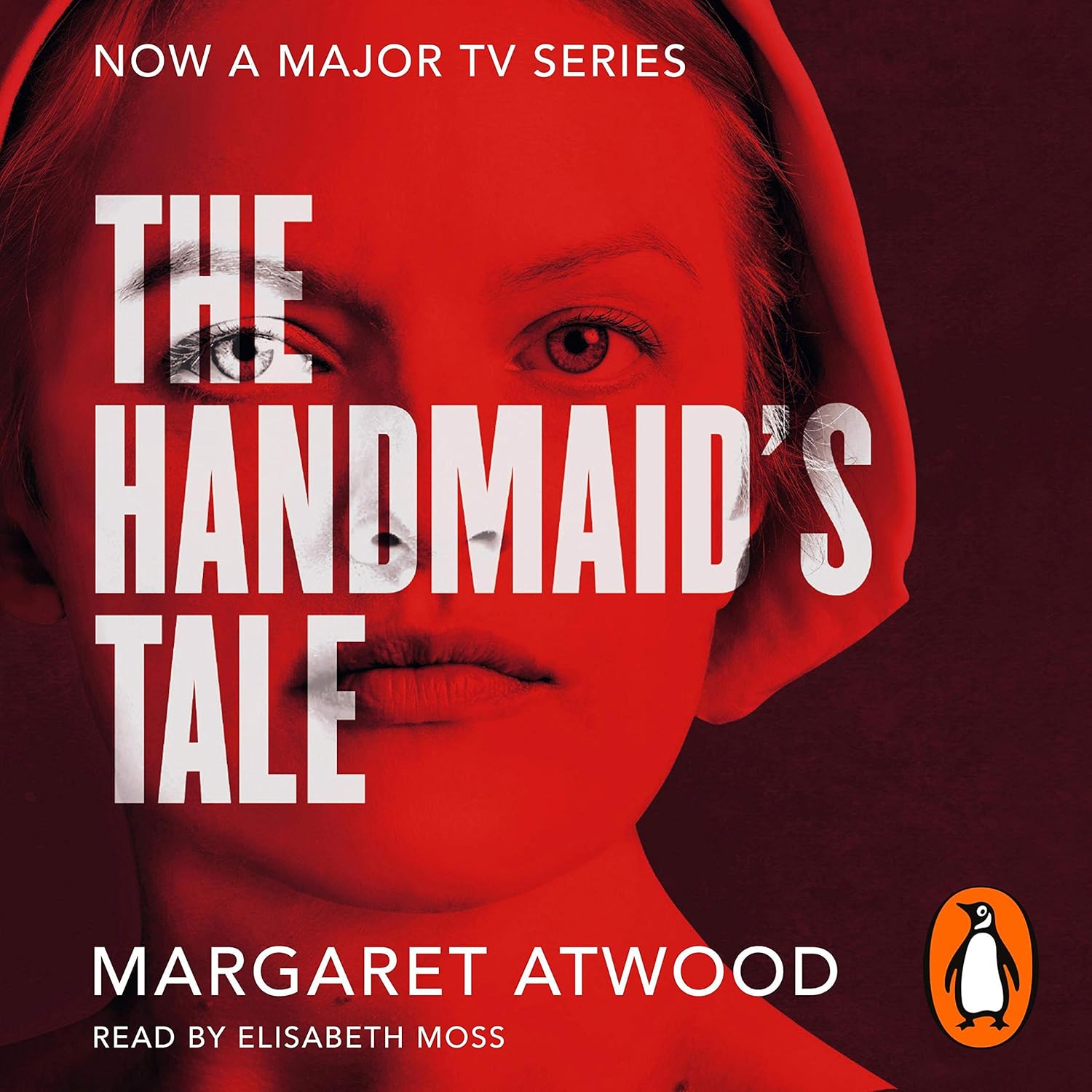
There are some books that become more unsettling every time you come back to them. Margaret Atwood’s The Handmaid’s Tale is definitely one of those. I first encountered it as a dystopian novel, a frightening vision of what might happen if a religious fundamentalist movement gained enough power to reshape American society. Reading it now, in 2026, it feels considerably less like science fiction than I would have preferred.
That isn’t necessarily because Atwood predicted everything correctly. She didn’t. Gilead is deliberately extreme, and thankfully the United States hasn’t become Gilead. But the ideas at the heart of the novel have become increasingly difficult to dismiss as merely hypothetical.
The basic premise remains horrifyingly simple. In a future America where fertility has collapsed, a fundamentalist regime called Gilead has taken control. Women have been stripped of their rights, their independence and their economic freedom, with fertile women forced into becoming Handmaids for the ruling class. Offred, our narrator, is one of them.
What makes the story work so well for me is that Atwood doesn’t present this transformation as something that happens overnight. Freedoms disappear through a series of changes that can initially be presented as reasonable, necessary or temporary. That gradual erosion is much more unsettling than a sudden revolution because it asks how ordinary people might respond while it is happening.
And that feels particularly relevant when looking at the United States in 2026.
The debates around reproductive rights, abortion, contraception, education, sexuality and the role of religion in government have made The Handmaid’s Tale feel uncomfortably current. The United States is obviously not Gilead, and drawing a straight line between contemporary American politics and Atwood’s fictional regime would be lazy. But her examination of religious ideology, political power and control over women’s bodies remains difficult to ignore.
What really gets me is the way Gilead changes the language surrounding oppression. It doesn’t simply rely on violence. Everything is presented as protection, morality, tradition or social order. Women are supposedly being given their proper place. Their suffering is reframed as duty.
That is a particularly nasty trick because it shows how easily coercion can be disguised as virtue.
Atwood is also very interested in the loss of identity. Offred’s name isn’t really her own. She has been reduced to her function and effectively belongs to the Commander she has been assigned to. Her body is treated as a resource, her fertility as a commodity and her personal desires as irrelevant.
Yet Offred remains remarkably human.
She remembers her previous life. She thinks about her husband and daughter. She remembers shopping, friendships, sex, work and all the ordinary freedoms she once took for granted. Those memories are important because they stop the story becoming some abstract dystopian nightmare. We understand exactly what has been lost because Offred remembers having it.
I also like the way Atwood handles resistance. This isn’t a story about one heroic woman standing up and defeating an evil regime. Offred spends much of the novel simply trying to survive. Small acts of rebellion become meaningful because even remembering who you were can become an act of resistance when somebody else is trying to define you.
There are a few things that don’t work quite as well for me. The narrative can be deliberately slow, and Atwood sometimes spends a little too long circling an idea that we already understand. Offred is also a deliberately passive protagonist for much of the story, which can be frustrating if you’re expecting a more conventional dystopian heroine.
But I think that passivity is ultimately part of the point.
Offred isn’t a revolutionary. She is an ordinary person caught in extraordinary circumstances, and that makes the story more frightening rather than less. Most of us like to imagine that, faced with tyranny, we’d immediately become heroes. Atwood asks a much less flattering question: what if survival became the priority?
There is also something clever about the novel’s treatment of men. Atwood doesn’t suggest that every man is a monster, nor that women are automatically virtuous. Instead, she shows how systems of power can encourage ordinary people to accept increasingly extraordinary behaviour. Some men benefit enormously from Gilead. Others comply. Some resist quietly. The system is sustained by all of them to different degrees.
Ultimately, though, this remains Offred’s story, and what stays with me is how effectively Atwood makes freedom feel ordinary before showing us what happens when it disappears.
When I think about dystopian fiction, I tend to think about dramatic images of totalitarian governments, surveillance and people being dragged away by secret police. The Handmaid’s Tale is more insidious. Its real strength is showing how oppression can become normalised, particularly when it is wrapped in the language of morality and necessity.
That is why the book still feels so sharp in 2026. The politics around women’s rights in America give Atwood’s ideas an uncomfortable resonance without making the novel a literal prediction of the present.
The Handmaid’s Tale isn’t perfect, and it isn’t a comfortable read. But it remains an exceptionally powerful piece of dystopian fiction. Its greatest achievement is making the loss of freedom feel personal rather than abstract.
And once you’ve seen that through Offred’s eyes, it is very difficult to forget.
Buy your copy here

Leave a Reply