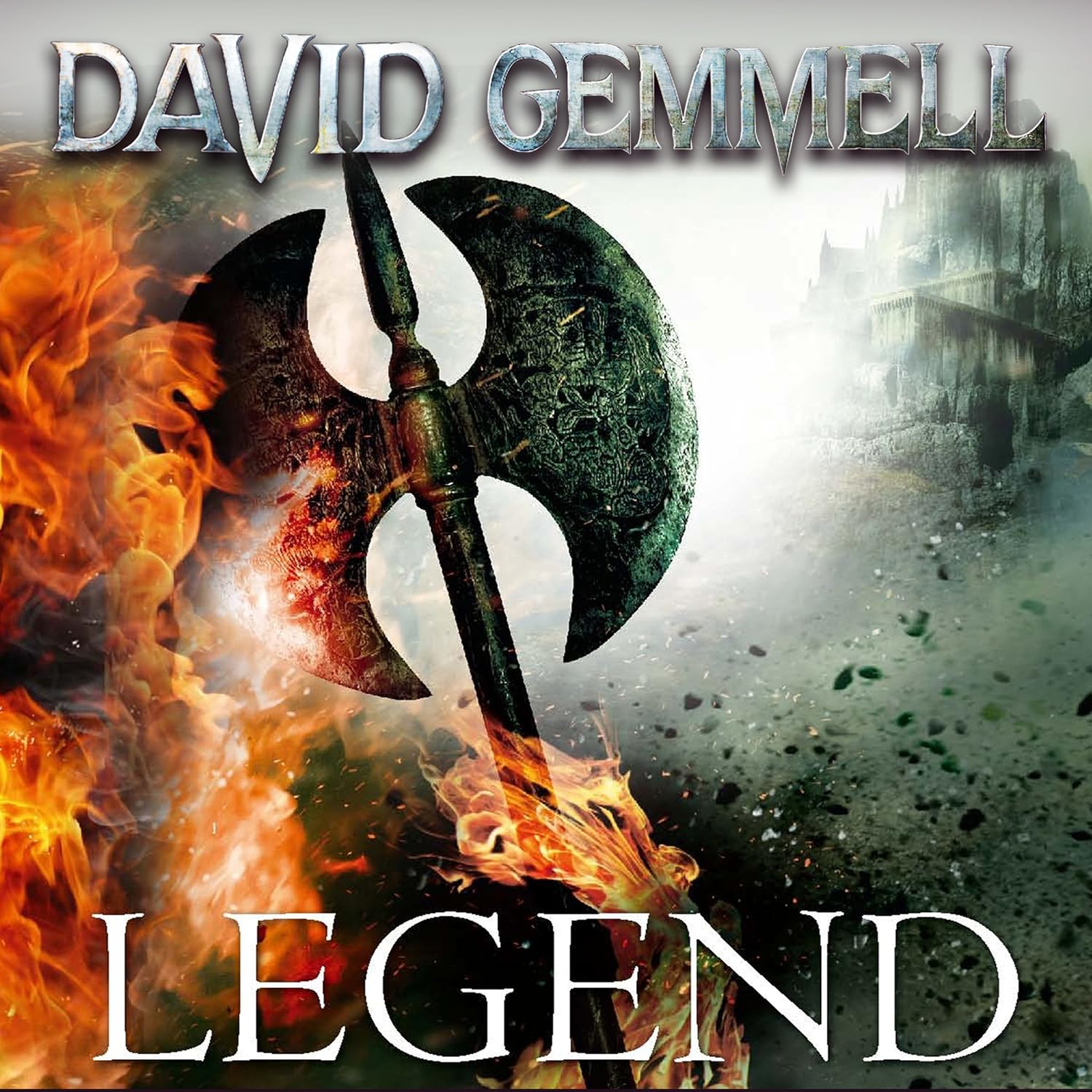
There are certain books that feel less like something you are reading and more like somewhere you are returning to. For me, David Gemmell’s Legend is very much one of those books. It is the novel that introduced so many readers to Druss, the Drenai, the Nadir and Gemmell’s particular brand of heroic fantasy. Coming back to it now, after all these years and after revisiting so much of the Drenai series, I find that I am enjoying it for rather different reasons than I once did.
When I was younger, Legend was all about the fortress, the battles, the desperate odds and the enormous axe. And, to be fair, those things are still fantastic.
Dros Purdol is about to face an overwhelming Nadir army, and the defenders know that they are almost certainly doomed. Into this situation comes Druss, an ageing warrior whose reputation is already the stuff of legend. He arrives not because anyone has summoned him with a prophecy, but because he has decided that this is where he needs to be.
That distinction matters.
One of the things I have increasingly appreciated about Gemmell is his treatment of duty. His heroes are often presented with impossible choices, but the question is rarely whether they can win. The question is whether they are willing to stand and do what needs to be done even when they know the cost.
Druss is perhaps the clearest example of that philosophy.
He knows he is old. He knows the odds are terrible. He knows that even if the fortress survives, there will be a price. Yet none of that changes his decision. He goes anyway.
I find that much more affecting now than I did when I was younger.
Back then, I saw Druss as the ultimate warrior, and there is still plenty of that here. Now I find myself much more interested in the man underneath the legend. What does it mean to keep doing your duty when you know you are not going to live forever? What happens when the person everyone believes you to be is no longer the person you feel yourself becoming?
Those questions give Legend considerably more weight than a straightforward siege story.
Then there is destiny, another recurring Gemmell theme. Legend plays with the idea that people are destined to become heroes, while constantly reminding us that destiny is not quite as simple as it sounds. Characters may believe in prophecy, fate or the inevitability of events, but Gemmell keeps bringing the focus back to choice.
You can be told what you are destined to become.
You still have to choose what you actually do.
That is something I find particularly compelling now. Perhaps because, as you get older, the idea that your life is simply a series of predetermined events becomes increasingly difficult to accept. We are shaped by circumstances, certainly, but we are also shaped by the choices we make when those circumstances arrive.
And then there is ambition.
Legend is full of it. Ambition for power, glory, revenge, recognition and, in some cases, simply survival. Gemmell does not treat ambition as automatically evil, which makes the story more interesting. Some characters want greatness for understandable reasons. Others want it because they believe they deserve it. The difference between the two can be surprisingly small.
I also enjoy the way Gemmell refuses to make either side entirely comfortable. The Drenai and Nadir are not simply good and evil armies lined up for a final confrontation. There are individuals on both sides with their own loyalties, fears and ambitions. The real conflict is often between people and the choices they make rather than between conveniently labelled forces of good and evil.
And then, of course, there is Druss.
There is something wonderfully old-fashioned about him, but I mean that as a compliment. He is direct, stubborn, honourable and occasionally spectacularly unreasonable. He has very little patience for excuses and even less for people who know what is right but refuse to act.
I have to admit, that simplicity appeals to me more and more.
Perhaps because the older I get, the more I appreciate characters who understand that doing the right thing is not always about finding the perfect answer. Sometimes it is simply about standing up when everybody else is sitting down.
Sean Barrett also deserves considerable credit for filling the world of the Drenai with life. His narration gives the audiobook a sense of continuity with the other Drenai stories, and his delivery captures both the larger-than-life quality of the action and the quieter moments between the battles. The production itself inevitably feels somewhat dated now, but Barrett’s performance remains a major part of the experience for me.
And that is probably the biggest difference between reading Legend when I was younger and listening to it now.
The younger me wanted the battles.
The older me is increasingly interested in the choices that lead people into those battles in the first place.
Legend still delivers the huge axe, the desperate last stand, the impossible odds and the larger-than-life heroics. But underneath all of that is a story about duty, ambition, destiny and the choices we make when there is no easy way out.
For me, that is what makes it endure.
I came back for Druss.
I stayed for the man beneath the legend.
Buy your copy here

Leave a Reply