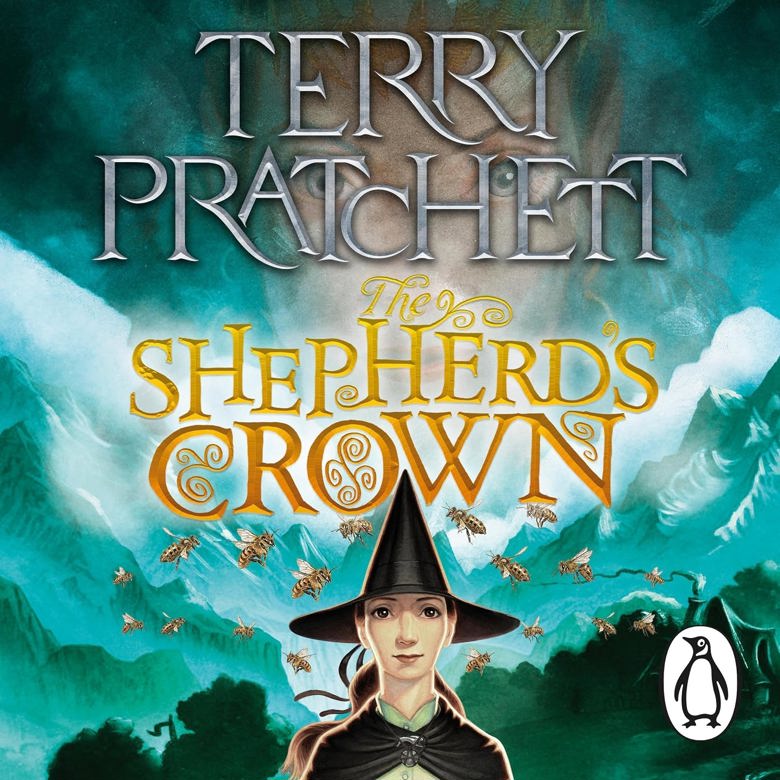
I felt an enormous mixture of grief and joy while reading The Shepherd’s Crown. Joy because even as Terry Pratchett’s final Discworld novel, it is still unmistakably a Discworld story, full of wit, warmth, memorable characters and those wonderfully sharp observations about people that he made look so effortless. Grief because every page carries the knowledge that this is the last time we will get to visit this world through Pratchett’s eyes.
Published five months after Sir Terry Pratchett’s passing, The Shepherd’s Crown was always going to be an emotional experience for anyone who has spent years travelling around Discworld. It is the 41st and final novel in the series, but more than that, it feels like the closing of a door on something genuinely extraordinary. Pratchett created a world that somehow managed to be ridiculous and profound at exactly the same time, and this final journey is a reminder of just how much we are going to miss him.
Appropriately enough, The Shepherd’s Crown is a tale of grief and the ending of an era, but it is also a story about beginnings.
The book does not shy away from loss. In fact, grief is at the very heart of it. Characters have to confront the absence left by someone who was previously such an enormous part of their world, and the story understands that grief is not simply about sadness. It is about change. When someone important is gone, the people left behind have to work out how the world continues without them.
That is an idea that becomes increasingly powerful when you consider the circumstances surrounding the book itself.
Tiffany Aching has spent the previous novels growing from a clever young girl into a capable and responsible witch. Here, she is faced with another stage in that journey. Growing up is not something that simply stops once you reach adulthood. There are always new responsibilities waiting for you, and sometimes those responsibilities arrive because there is nobody else left to carry them.
That sense of obligation has always been central to the Tiffany Aching books. Witches do what needs doing. They help people when they are frightened, hurt or in need. They do not necessarily get thanked for it, and they certainly do not do it for glory. The Shepherd’s Crown takes that idea and pushes Tiffany towards the next stage of her life.
The ending of an era is not just something that happens to Tiffany. It is something that hangs over the entire book. Familiar ideas and characters take on new meaning, while the world itself seems to be moving forward. There is sadness in that, but Pratchett never lets the story become hopeless. Endings create spaces for new beginnings, and while the world may change, that does not mean it has stopped being worth fighting for.
That balance between grief and hope is one of the things I appreciated most about the book.
It is also worth saying that this is not a gloomy farewell. There is plenty of humour here. The Nac Mac Feegle remain gloriously chaotic and completely incapable of behaving like sensible creatures. Their particular brand of violence, theft and incomprehensible enthusiasm continues to provide plenty of laughs, and they remain an essential part of Tiffany’s world.
That humour is important because it feels very much like Pratchett. Even when dealing with death, grief and enormous responsibility, he never forgot that life could also be ridiculous. Sometimes people are at their most human when they are being completely silly, and Discworld has always understood that.
I have also continued to really enjoy these new Audible editions, and The Shepherd’s Crown is another excellent example of how well they suit Pratchett’s writing. Indira Varma and Steven Cree are once again wonderfully suited to the material. They bring warmth, personality and energy to the narration, making the characters feel like living people rather than voices on a page.
The emotional moments are handled particularly well, but the performances never lose sight of the humour. That balance is crucial with Pratchett, and both narrators understand exactly when to let a joke breathe and when to allow a quieter moment to carry its full emotional weight.
Bill Nighy once again provides the voice of the footnotes, and this remains one of my favourite additions to these new editions. His wonderfully dry delivery is perfectly suited to Pratchett’s asides, making even the smallest footnote feel like a welcome part of the performance.
Peter Serafinowicz also returns as Death, and it remains inspired casting. Death has always been one of Discworld’s greatest characters, and Serafinowicz brings exactly the right mixture of gravity and dry humour to every appearance.
The Shepherd’s Crown is not simply the final Tiffany Aching story. It is the final Discworld novel, and that gives every moment an emotional weight that is impossible to ignore. Knowing that Pratchett died before its publication makes the experience bittersweet, but the book itself is full of life.
There is grief here. There is loss. There is the undeniable sense that an era has come to an end. But there are also beginnings, new responsibilities and the certainty that the world carries on.
That may be the most fitting farewell Terry Pratchett could have given us.
I finished The Shepherd’s Crown feeling sad that there will be no more new Discworld stories, but overwhelmingly grateful for the ones we have. It is funny, moving, thoughtful and, despite everything, hopeful.
A fitting final chapter for Tiffany Aching, a bittersweet farewell to Discworld and a reminder that even when an era ends, the stories we love can continue long after the storyteller is gone.
Buy your copy here


Leave a Reply