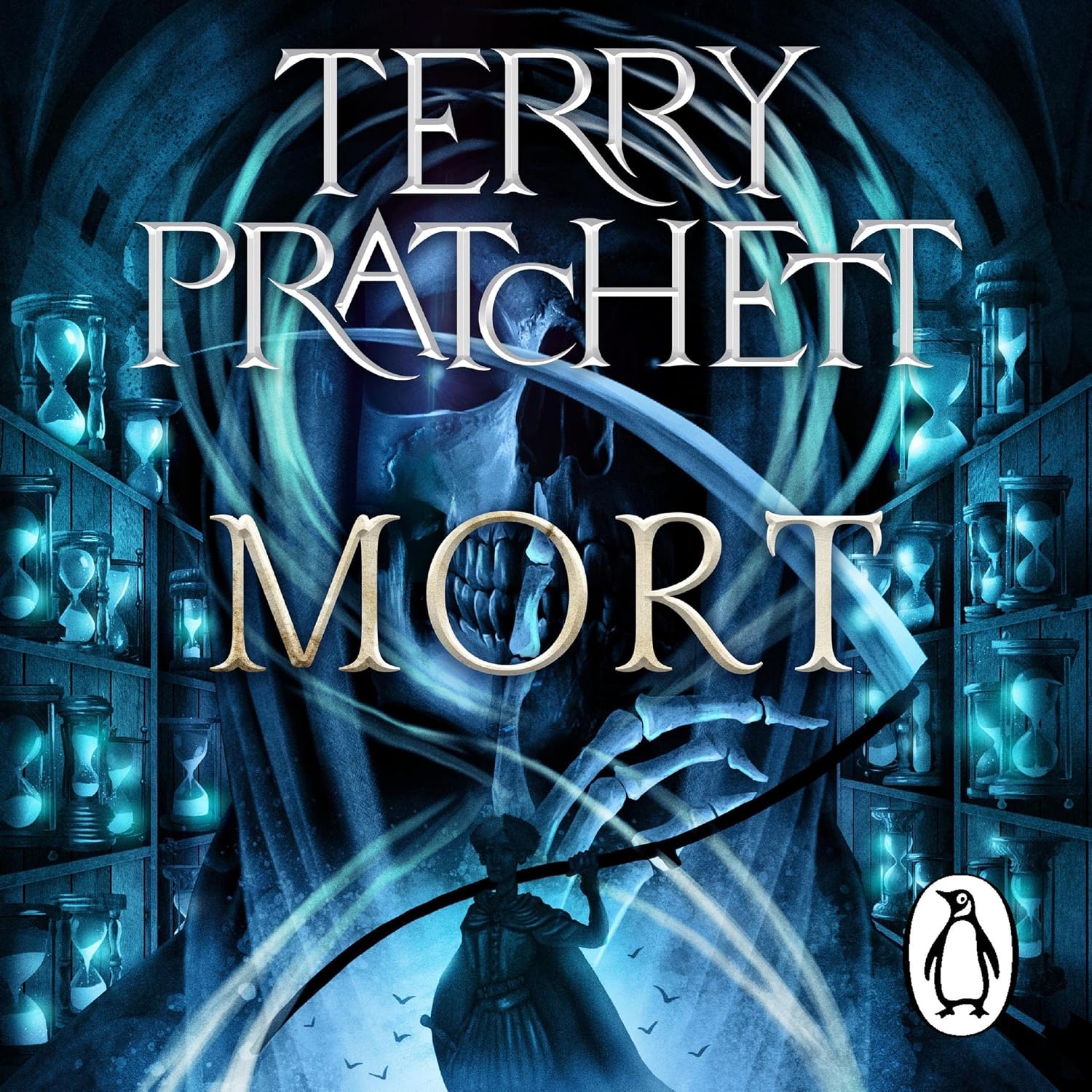
There are certain books that feel as though they have been sitting patiently on your reading list waiting for you to get around to them. Mort is one of those books for me. Terry Pratchett’s Discworld has been part of the literary landscape for so long that it is almost impossible not to have encountered it somewhere, even if you have somehow managed to avoid reading the books themselves. Eventually, though, you have to find out what all the fuss is about.
Mort is a particularly good place to start.
The basic premise is wonderfully simple. Mort is a rather awkward young man who is taken on as an apprentice by Death, a job which sounds considerably more impressive until you realise that the actual duties involve quite a lot of turning up at inconvenient moments and dealing with people who are generally having the worst day of their lives. It is not, in other words, your typical careers advice brochure.
What makes the story work so well is that beneath all the jokes, absurd situations and wonderfully strange characters, Mort is really a story about growing up.
Mort begins the novel as someone who is struggling to find his place in the world. His family have expectations of him, although quite what they expect him to become is not entirely clear. He is awkward, uncertain and not especially good at fitting into the role that has been prepared for him. Then Death offers him a job, and suddenly Mort has responsibility.
Unfortunately, responsibility turns out to be rather more complicated than simply being given a uniform and told where to stand.
One of the things I particularly enjoyed is the way Pratchett explores the difference between being given responsibility and actually being ready for it. Mort is suddenly placed in a position where his decisions have consequences, but he has not yet developed the experience or maturity to understand those consequences properly. His intentions are not necessarily bad. In fact, they are often perfectly understandable. The problem is that the universe has an irritating habit of insisting that actions have consequences regardless of how good your intentions were.
There is some wonderfully sharp social commentary wrapped up in all this. Expectations can be a strange burden, particularly when they are imposed by family, society or simply by the assumptions we make about ourselves. There is a persistent question running through the story about whether growing up means becoming the person other people expect you to be, or working out who you actually want to become.
Naturally, because this is Discworld, these ideas are delivered alongside death, magic, talking objects, strange aristocrats and situations that would be deeply alarming if they were not so funny.
And then there is Death himself.
Peter Serafinowicz is absolutely perfect in the role. There is something wonderfully imposing about his presence, even when the character is being used for comic effect. He manages to make Death sound like someone who has been doing an extremely important job for an extremely long time and has therefore developed a rather particular view of humanity. There is warmth there too, which is important, because Death could very easily become nothing more than a running joke. Instead, Serafinowicz gives him presence and personality.
Sian Clifford also deserves considerable credit for the narration. Her performance suits the story beautifully, particularly because Mort requires a narrator who can move comfortably between the ridiculous and the genuinely thoughtful. There is a lightness to the delivery that allows the comedy to land, while the quieter moments are given enough space to remind us that underneath all the absurdity, this is a story about people trying to work out what they are supposed to do with their lives.
And then, almost as if the audiobook needed another reason to be excellent, there is Bill Nighy providing the voice of the footnotes. His trademark nonchalance is sublime. It is exactly the right sort of delivery for those wonderfully unnecessary little diversions that somehow make everything even funnier.
What I like most about Mort is that it never feels as though it is trying to teach you a lesson. It simply tells a funny, strange and occasionally surprisingly thoughtful story and lets the ideas emerge naturally. Growing up is messy. Responsibility is inconvenient. Other people’s expectations can be baffling. Making your own choices can be considerably more complicated than expected.
There are worse things to learn while laughing.
Mort is warm, clever, silly and considerably more thoughtful than its premise initially suggests. It is a story about death that is really rather full of life, and an entertaining reminder that becoming an adult is less about suddenly knowing what you are doing and more about learning to accept that nobody really does.
At least Mort gets an apprenticeship out of it.
Buy your copy here

Leave a Reply